

Happily Ever Afters is one of those what I like to call “snap summary” books: where the summary sounds so relatable and fun that there was no question of buying it. Any book that explores the turbulent journey of being a writer hits so close to home. You all know that I’m not particularly wild about romance books, which this book’s summary promised, but hey, I relate to the writer’s journey, so I dove in anyway.
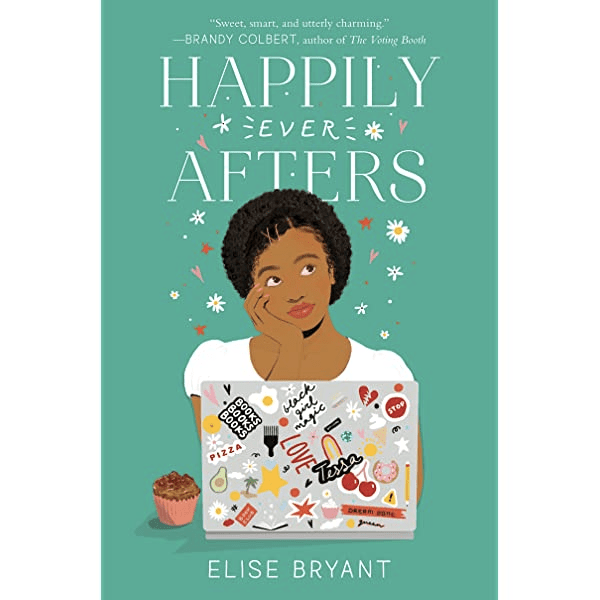
Tessa Johnson’s creative writing skills have earned her acceptance into Chrysalis Academy, a prestigious arts conservatory in Long Beach, California. She adores writing romance stories, which share shares only with her best friend and fellow romance addict, Caroline. But once Tessa’s first day of school comes, the words cannot come. In an attempt to jump-start the words, Caroline concocts an eleven-step plan to get Tessa her own love story. Enter Sam, Tessa’s adorkable next-door neighbor, and Nico, the writer hunk from Tessa’s writing class who happens to resemble Tessa’s own romance hero. Who will jump-start Tessa’s creative juices (in a manner of speaking)?
I didn’t care that I predicted this story’s outcome before opening the book. A writer with lost inspiration entering a love triangle between two archetypal love interests still sounded so interesting.
And once again, we have a case for the lean, dorky, next-door neighbor being more attractive than the typical romantic hero.
Sam is such a cool guy! Not only can he work magic in the kitchen (he goes to Chrysalis’ culinary arts program), but he is so easily accepting and ready to defend. Tessa has initial anxiety about Sam meeting her disabled brother Miles, but he treats Miles with empathy and has just as much fun with Miles’ interests as he does. It’s sweet to see Sam so easily enter a situation where many other people have failed.
Tessa carries a lot of anxiety through the story, particularly about her writing and her dark skin color. She feels uncomfortable showing off her work (hence the loss of her words once class begins), but also feels the need to show up as the token black girl. Luckily, she feels more at home with herself after finding friends at Chrysalis, but she still deals with a few moments of racism.
She and Sam stop at a spice shop once, and the shop owner gives Tessa some passive-aggressive comments about her skin color, and Sam, the white knight that he is, declares that he, nor anyone in his culinary circle, will ever shop there again. Maybe it’s a white savior moment, but I thought it was charming and sweet of him.
I can also relate to Tessa’s anxiety about her writing. She writes romance primarily, so she doesn’t think it will hold up against the realistic or “important” fiction that her classmates present. I remember feeling that way when entering my graduate program, since most programs were interested in realistic, contemporary writing that talk show hosts gushed about. I was lucky to find a program that accepted genre fiction, but still, the anxiety about your writing not holding up in a workshop setting is scary.
It’s not just Tessa’s writing anxiety that makes her relatable, but her worry about not wanting to burden anyone.
Her parents spend a lot of time helping Miles with his disabilities, so Tessa tries not to give them more to worry about. She doesn’t say anything when her writing dries up, and even finds herself spinning a few white lies to keep the focus off her. But that’s the thing: she wants to be seen and helped, but she doesn’t want to disappoint or hurt anyone with her own problems.
Plus, now that she and Caroline have moved far apart, she feels bad about her jealousy toward Caroline finding new friends, going out more, and getting a boyfriend. I certainly can’t pretend that I didn’t relate to that with being apart from my own best friend.
Basically, Tessa is a lovable and super relatable little pumpkin.
I’ll also give points to the rest of the cast for just being mature. I’ve found that that’s what makes a romance story work for me. When the characters act like children or ignore overwhelming evidence when making a decision, the book dies quickly. But when everyone just takes a deep breath and freaking listens to each other, I like the book ten times more. At least that means we avoid a contrived misunderstanding in the third act.
This book may be predictable and fluffy, but in all the right ways. The characters are fun, mature, and engaging, and Tessa’s journey is easy to connect with. Writers and avid readers will definitely find a lot to connect with here, and people who enjoy a simple, cute teenage romance should be satisfied too.


 The Library Key