

Some people forget that many familiar fairy tales like Cinderella, Sleeping Beauty, Beauty and the Beast, and so on, have similar retellings or interpretations across the world. Case in point: East of the Sun, West of the Moon, a Norwegian variation of Beauty and the Beast that takes place in the far North and the beast is a magical polar bear. I’ve expressed my fondness for this fairy tale by reviewing titles like Sarah Beth Durst’s Ice, and today, I find myself reviewing another novel-length version of this wintery love story.
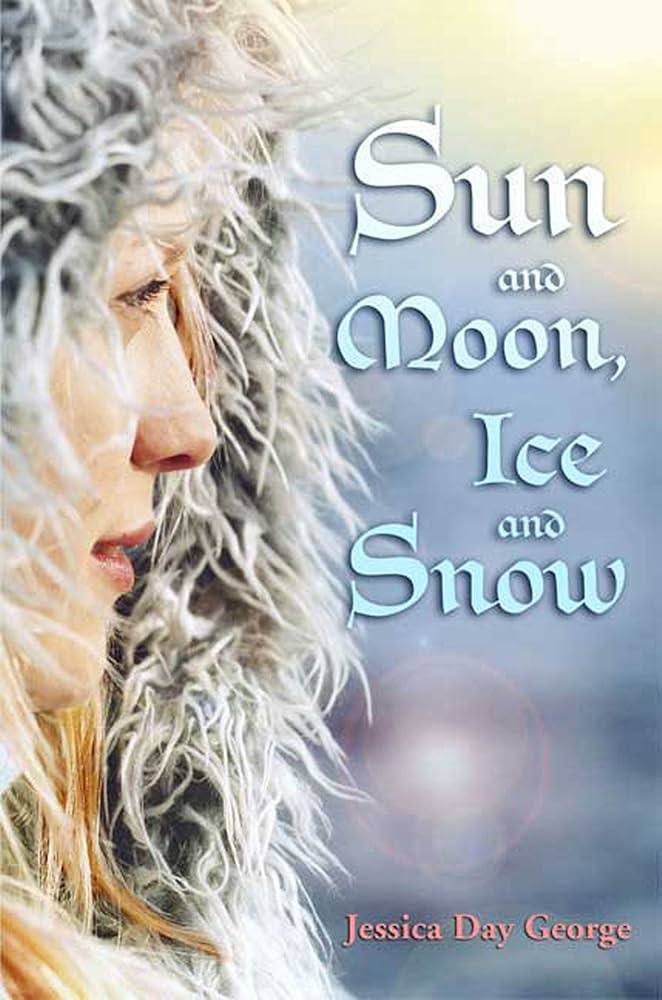
In the far North, an unnamed lass and her huge family live in a cottage in the midst of a vast ice plain. The lass is largely ignored by her family, since she is not a lucky third son who will bring fame and fortune to the home, but she is still strong-willed, kind, and has a magical gift for talking to animals. But one day, a large enchanted polar bear arrives at the cottage, asking the lass to stay for one year in his ice palace, in exchange for the lass’s family receiving the fame and fortune they long for. As time goes by, the lass begins to unravel the mystery behind why she was chosen as the polar bear’s companion and his connection to the mythical world around them.
The further along I got in this book, the more I realized I might have another Beauty or Wildwood Dancing on my hands, where the sheer fairytale-ness of the story could become all-consuming. The writing is not quite as lyrical as those two books, but the way the story spun itself was compelling and, naturally, enchanting.
I like how the lass is a kind and gentle girl, but she is not sugary sweet. She gets irritated and can be sarcastic sometimes. I find it a little annoying, though, how she doesn’t have a name. Although, at the beginning of the book, when she rescues a magical elk, he thanks her by giving her the most beautiful name in existence. The name we eventually hear is beautiful, but maybe it would have been better to not hear it at all, so as to attach our own beautiful name to her.
It did make me laugh how the palace had running water, with sinks, tubs, and even a toilet. The lass’s wolf, Rollo, even says that the toilet is not meant for a chamber pot but for him to drink out of. Never known a single dog that did not think a toilet was their own drinking bowl.
The mystery of the enchantment unravels in a clever way, with the lass learning to read another language and learning the story through carved pillars and patterns on palace clothing. She doesn’t just hop on over to the library to read the history: she learns it through something a little more creative and unconventional.
Like with the last East of the Sun, West of the Moon story I read, the love story almost comes second to learning more about the enchantment. The bear is a kind, wistful, and lonely creature, but the relationship between him and the lass doesn’t feel quite as strong as it should. A story where a lass has to cross a dangerous and terrible terrain to rescue her true love needs to have some serious chemistry.
It would have probably worked better if the bear was able to tell the lass a bit about the enchantment and they could try to unravel it together. It was not necessary to keep them separated when they could be doing something together other than making small talk at the dinner table. They could bounce ideas off each other; they could learn the troll language together. After all, they’re both ordinary people trapped in this strange world, so why not go through it together and build up a relationship worth taking a dangerous journey for?
It’s also kind of annoying how everyone plays the pronoun game when talking about the main villain of the book. It sort of feels like a cheap way to build suspense as to who created the ice palace. I suppose no one uses the villain’s real name because doing so would invoke their presence, but if they had come out and said so, instead of resorting to that cheap narrative trick, it would have felt more natural.
Sun and Moon, Snow and Ice expanded its wintery fairy tale origins almost as well as it could have. It still bothers me that the love story came second to unraveling the mystery. In order to build chemistry worth fighting for, the characters need to spend some honest time together, without secrets and without playing the pronoun game. I still had a good time getting engrossed in the mystery, but I wish there was a sweeter, more cohesive romance at the center.

 The Library Key