

The same way I’ve discovered a fervent enjoyment for stories about crazy entitled or religious people, I’ve grown a fondness for stories about strong women discovering their own inner power. Or, in the case of Weyward, their own inner magic.
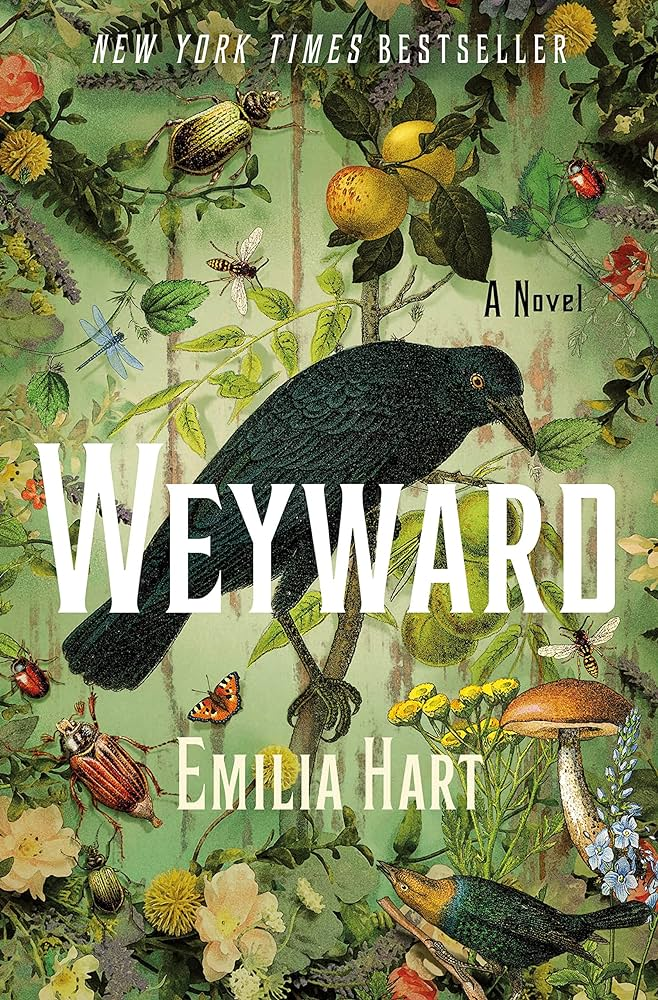
In 1619 England, a young village healer named Altha Weyward is charged in court as a witch for the mysterious death of her childhood friend’s husband. In 1942, teenage tomboy Violet chafes against her strict upbringing and longs to know more about her late mother. In 2019, shy Kate runs away from her abusive partner to her late great-aunt’s cottage, where she begins to discover strange secrets about her family. All three women are linked by a supernatural family legacy, each finding love and tragedy as they grow into the strong, confident Weywards they were meant to be.
It speaks to Emilia Hart’s storytelling skills that no woman’s story is more interesting than the others’. All three of them try hard for their independence, but they chafe against the constraints placed upon them by powerful men, such as a prejudiced judge, a misogynistic and power-hungry father, or an abusive partner. It might be too easy to relate to one, if not all, of these women.
Stories about women like Altha, Violet, and Kate, are very important to tell. They show how when women band together and protect each other, there is always hope for a brighter future. Even when one of them has to go through a harrowing experience by themselves, they find solace in letters and records left by their ancestors, telling them that they aren’t the only ones to have experienced this prejudice, abuse, and isolation: that there is a special power within these women to fight back and win their freedom.
Altha, Violet, and Kate are linked by their experiences not only with dangerous men, but also with a crow. Altha’s mother had a pet crow, Violet finds a feather that belonged to a crow her mother knew, and Kate’s life is saved by following a crow closer to help. It’s never stated, but the crow must be the Weyward familiar (that is, a spirit companion to a witch; a black cat is a common example of a witch’s familiar), making the women’s connection even more magical. Not to mention Altha’s cottage, which Violet and Kate also find solace in at their lowest moments.
The cottage evokes fairy tales and village legends, with its nearby beck, herb garden, and quiet comfort. It is where all the Weyward stories come together, where each woman feels safe, where each woman begins to blossom into their best self. Of course, that only happens when these women feel safe: away from abusive partners and ambitious fathers. Where they are surrounded by the strong, tender, loving ghosts of previous Weyward women.
If I had to pick my favorite story, I would likely point toward Violet. She has a wild, playful, imaginative spirit, which her father tries to hide away by keeping her in the giant noble home he inherited. She is expected to be seen, not heard, and any pushback is harshly punished. And the secrets that Violet uncovers about her mother are absolutely tragic and despicable. It’s hinted that later in her life, Violet took some sort of revenge on the person who wronged her the most, and it’s delightful seeing how her wrongdoer wound up because of it.
That’s the wish fulfillment of this book for me: that the men who misused or abused these women get their comeuppance. They say hell hath no fury like a woman scorned, but hell also hath no fury like a woman forced to stay quiet for too long.
Kate’s story provides some sweet Hallmark movie vibes about living in an old family cottage, working at a local shop with a sweet family friend, surrounded by kind people who help protect a shy woman from her abusive boyfriend. It’s the most predictable of the three storylines, but it is cozy and comforting nonetheless; sometimes, you just need to read about good people doing good things. As well as the wish fulfillment of an abusive partner getting left behind for something better and safer.
Weyward is another story by a woman for women, depicting how they can be underestimated or pushed aside for the sake of a man’s selfish ambitions. It is ludicrous that there are still people with such backwards beliefs about women’s biology or ideal behavior, and this is a great cautionary tale about pushing those beliefs onto a woman. You never know if she’ll turn out to have some special ability that will make you regret ever mistreating or underestimating her.
They say the appeal of witchcraft to women is because it is power that doesn’t come from any connection to a man. A witch does not need a husband or father in order to make her own way in the world. And a witch’s anger, frustration, and disappointment with a world that puts her down can manifest in more power than any man could realize. But even if a woman does not identify as a witch, her confidence is what makes her dangerous to some men, and it’s so important for women to find power that doesn’t derive from their connection to a man, because that’s what we’ve been conditioned to believe.
All this to say that the three Weyward women illustrate how finding confidence in yourself and knowing your powerful inner strength can help protect you from the wrong people and attract the right people.

 The Library Key