

I admit that I have not read a short story collection since grad school, but when you’re looking for a very particular story, but you don’t want to commit to a full-length book, these collections can come in real handy. In this case, being that it’s spooky season and naturally I am all about the witch vibes, I struck gold when I found Toil and Trouble: 15 Stories about Women and Witchcraft. Fifteen stories about different kinds of witches and magic? Sign me up!
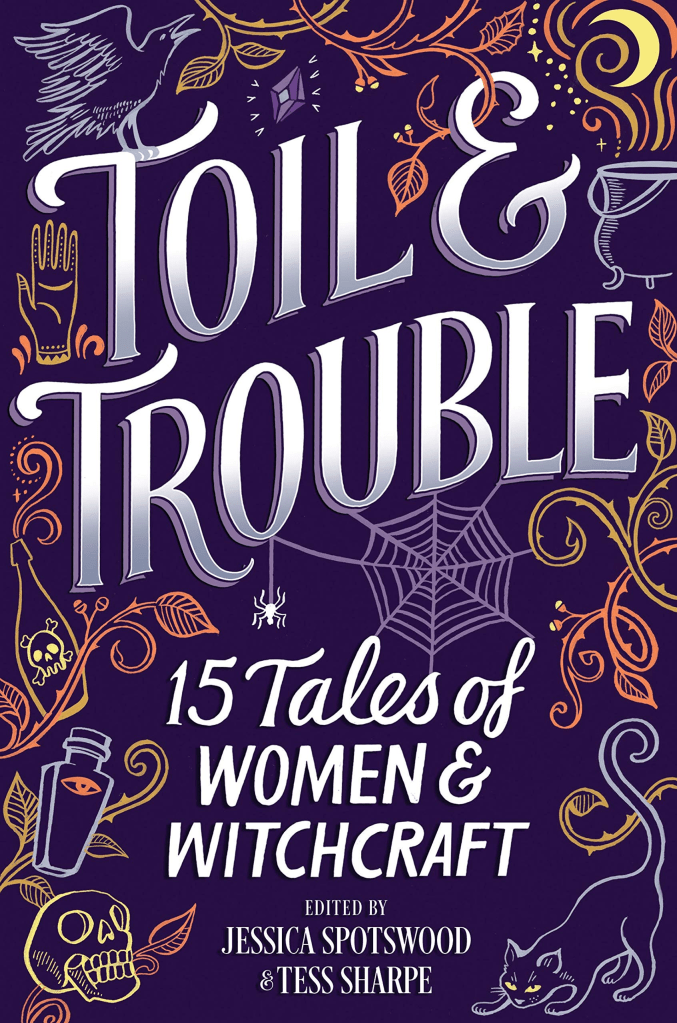
As with any short story collection, some stories will stick with you and others will not. But the whole point of this collection is to show what happens when women take charge of their destinies and don’t hold back for other people. Like I’ve said across many reviews, witchcraft is a great way to showcase not just feminine power, but what happens when a person relinquishes fear and chases their dreams with confidence. That a person can learn to shrug off what they might have been taught to believe about themselves or others, and become who they want to be.
One of my favorite stories was “The Heart in Her Hands” by Tessa Sharpe. This story shows a world where young witches’ magic are bound until they reach a certain age, but the main character finds a way to break her binds early and defy the elders of her family’s coven. I love stories where a bunch of stuffy grownups control their childrens’ lives with fear and abuse, claiming that choosing your own destiny goes against the will of some holy power. And when the children find a way to break free and even get some subtle revenge on those who tried wrongfully to control them, their victory is just so profound.
“The Truth about Queenie” by Brandy Colbert was another favorite. We’ve all known the pain of wanting someone to love us, but we are helpless to make them love us in return. Queenie is in love with her best friend, Webb, but when he comes back home, he has a brand new girlfriend that Queenie is immediately jealous of. She wrestles with what to do about this for most of the story until she is forced to consider using long-unused magic to help Webb avoid a tragedy. I love the bonds that Queenie has not just with Webb, but her aunt Queenie (her namesake) who makes a living making healing potions while traveling the world. Every girl needs a woman that she can count on for advice free of judgment.
Lindsay Smith’s “Death in the Sawtooths” was an interesting take on how we view death. Mattie is a necromancy witch who helps dead bodies find peace before they can fully pass on, and although her work is very valuable, many people are afraid of it, and even shun her for it. It’s kind of like a “Rudolph the Red-Nosed Reindeer” story about how some people are loved only when they are needed and then pushed right back into the dark when they’ve done their job. But still, it’s a nice idea that there are people who take the dead’s last wishes and send them to the afterlife feeling at peace.
The last two stories are remarkable examples of healthy, strong, loving sisterhood standing against injustice. In “The Gherin Girls” by Emery Lord, a trio of sisters finds an abusive boyfriend returning to town, and they must rally around each other to ensure that the past does not repeat itself. The sisters are remarkably well-drawn and their unconditional love for each other is just so sweet. This story is a wonderful reminder that the victim is never responsible for the abuse they receive, and that they can always find support somewhere, whether that be among sisters or friends (like, seriously, take a drink every time someone says “It’s not your fault” in this story, and you’ll be bouncing off the walls). It’s kind of disappointing how there is not a big showdown between the magical sister trio and the abuser, but I suppose it’s just as well that the victim finds peace regardless.
And finally, we have “Why They Watch Us Burn” by Elizabeth May. This story hits you over the head with its message about injustices against women, but man, that female rage is very potent and gratifying to read. There are some lines from this story that I still think about: how there are people in the world who would rather see a woman die than let her wield any kind of power, or how women are persecuted because some men fear the power that a woman can wield. This story feels like it was written from a place of deep, deep female rage, and the author was dredging up every unjust, stupid, illogical reason why women are persecuted, ready to watch the world burn. Can’t say I blame her.
Like I said, not every story in this book was a home run (I had to look up each individual story to remember certain details), but it is a nice burst of magic and Halloween vibes. If you need a collection of stories about diverse people and diverse magic, this is a great place to start. And who knows, you might find a set of new authors to check out along the way.
I’ll leave you now with the most powerful quote of the whole book: “Here’s the truth: I want to cast spells, I want to heal, I want to destroy, I want to create, I want to use magic and rise, and rise, and rise to my feet, into the air, and fly. If witchcraft is the voice of women rising free and powerful (to change the world, make it ours, on our feet instead of on our knees) then I wish to be a witch more than anything” (May, 396).

 The Library Key