

When it comes to stories about witches, I have a very specific idea in my head. I not only expect for them to be powerful, but also to have the ability to overcome a serious obstacle with their magic. If they’re lacking in either of those, an interesting story can at least compensate for that. But when you have a boring witch and a boring story, well…
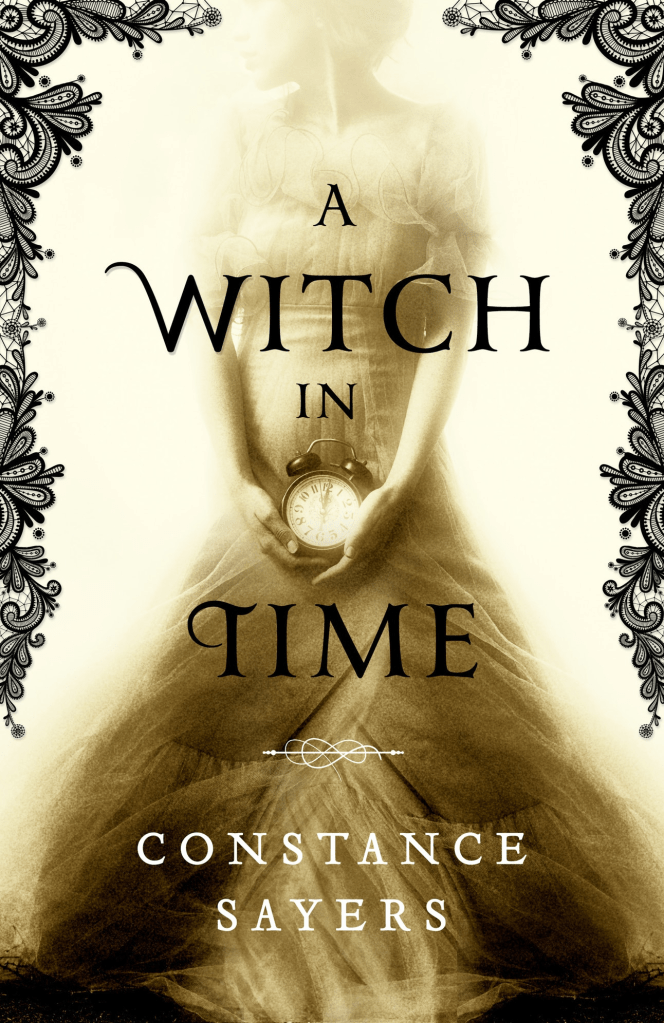
Helen Lambert is doing well as a successful magazine editor in Washington, D.C. despite her recent divorce from her husband Roger. But one night, she goes on a blind date with a man named Luke Varner, who tells her that she is something extraordinary. Helen is a witch who has lived three different lives since the late 19th century, growing in power with various abilities in each life. But Helen learns that she dies in each reincarnation at thirty-four years old, so she sets out to break the curse before time runs out.
This book has two things that I really enjoy: magic and time-travel. Although Helen herself does not go back in time to interact with her past selves, she dreams of each one as if she were watching a film. We see how each iteration falls in love with the same man, discovers her curse, finds a special use for her growing powers, and is too late to save herself before she reaches thirty-four years old. Each one is also a glimpse into a different time in history, going from the late 19th century with Juliet LaCompte in France, to the golden era of film with Nora Wheeler in California, to the beginning of the Vietnam War with Sandra Keane in New Mexico, and finally to 2012, when Helen’s story takes place. Above all else, I think the time travel aspect is most interesting.
The time travel is the most engaging aspect since Helen is not a witch in a traditional sense. She is less of a potion-maker and spell-caster as much as a kind of superhuman, who can bring back the dead and suggest things to people as a kind of mind control. But because her power is so limited, it doesn’t make her a very memorable or exciting witch.
But the problem with the time travel is that each iteration tells more or less the same story. Helen is trapped in a binding curse her witch mother cast on her in her Juliet lifetime, created from a desire to keep her daughter away from a man she wasn’t supposed to be with. Thus, she will find the same man across time, fall in love with him, but they will be separated by tragedy. Inevitably, Luke will find her and explain the curse to her. And by the time this happens for a fourth time, the story has lost a lot of flavor. Although each iteration’s historical context is interesting, and each woman is unique from the other in terms of interests and talents, you know how the story will play out each time, and it doesn’t make you want to read on.
Even though there are stakes with Helen trying to break the curse, we spend so much time with her past selves that she goes forgotten about in telling the other stories. I was in the middle of listening to Nora’s story before I realized that we hadn’t checked in with Helen in at least several dozen pages. It’s almost like the writer got so engrossed in writing different historical perspectives that she also forgot about Helen: as if she wanted to write about different times in history but needed a loose way to tie them all together because they could not stand as their own stories.
Like I said, it’s all pretty repetitive, and pretty soon, I didn’t care all that much about Helen breaking the curse. The story even tries to push a love story between Luke Varner, the demon administrator of Helen’s curse, and some of her past lives, but none of them really worked, either. Luke does some questionable things and he didn’t have much personality either, so I didn’t care whether he got his heart’s desire either.
In the end, it felt as though the author were pushing five different stories together, but none of them included a truly interesting heroine or romantic chemistry. And in a book this long with this much going on, somehow, it didn’t have enough of anything to grab onto.


 The Library Key