

I’ve talked a lot about my experiences with the Butler University Visiting Writers’ Series, and here’s another book from another one of those visiting writers.
Lev Grossman visited during 2016, and The Magicians was the book my MFA program promoted the most ahead of his visit. I hadn’t read the book at that point, but I became further intrigued after attending both his speaking events at the school. It might have helped that I got to speak with him personally as an MFA student, and we talked briefly about our mutual enjoyment of King Arthur stories (he was working on The Bright Sword, which only recently released). Now knowing The Magicians‘ influence from other fantastical books, such as King Arthur and Narnia, it was hard to resist its call.
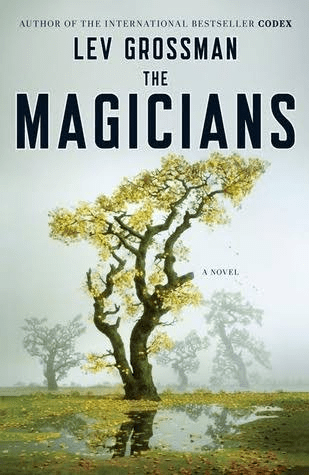
Quentin Coldwater is a Brooklyn teen who yearns for the wonder, adventure, and beauty of his favorite book series, Fillory and Further. One day, when he thinks he is going in for a Princeton admissions interview, he finds himself instead in the secret, magical world of Brakebills College for Magical Pedagogy. Quentin and a select number of other students spend years diving into magical learning, but it seems not even becoming a bona fide magician is enough to satisfy Quentin’s yearning for something more…
The very first thing I was told about The Magicians was that it was “Harry Potter in college”. But the book is more than just detailing the ins and outs of Quentin’s time in school. It shows the beginning of his training as a magician and what comes after, all with a melancholy, bitter edge. Which was something that I was not expecting in a book about college-age magicians.
In most cases, the discovery of magic is filled with whimsy and joy and discovery. And while those elements are not necessarily absent from this book, Quentin’s inability to live in the present and enjoy his discovery almost renders the incredible discovery of magic null and void.
In fact, he never finds much satisfaction in anything, partially because he is so enamoured with the whimsy and adventure of Fillory that nothing can compare. But especially when the glamour and novelty of magic wears off, he is left once again in deep depression and wondering what will bring him happiness in the long run.
Even in my first time reading this book, I thought Quentin was one of the least interesting characters in the book. He seems like less of a participant in the story and more of an observer, always hanging back, always waiting, never taking any kind of action to find happiness. Even in the most interesting parts of the book, when he does participate, he cannot act beyond just taking everything in and feeling melancholy about it. And that gets to be a bit old after a while. In fact, Quentin’s insatiable quest to find what will bring him ultimate happiness starts to sound like whining after a point.
I think that’s my biggest point of contention with Quentin. Although his quest to find whatever will bring him joy in a cold, monotonous, uncaring world is painfully relatable, the fact that he just sits around philosophizing about the cold, monotonous, uncaring world, and doing nothing to find his happiness gets very annoying. He sits around feeling sorry for himself way too much and doesn’t take a lot of action until he is called out for it way later in the book.
And maybe this is me reading this book as a woman, but it’s a little annoying to have Quentin objectify almost every woman he meets.
Quentin kind of sucks, but his experiences at Brakebills and beyond do reveal a very sad reality for many adults. In this case, you could discover the most incredible thing in the world, and you could still not enjoy it because you fear it will inevitably disappoint you and you’ll have to find the next thing to bring you joy, and the cycle repeats.
And of course, not even when Quentin sees for himself that his beloved land of Fillory is real and can be reached via magic buttons, can he truly be happy.
Now, I don’t see the disillusionment of Fillory as Grossman taking a jab at more innocent, whimsical fantasies like Narnia, like some people think. He mentioned in his talks that he took a lot of inspiration from Narnia, and if you compare those books to the Fillory stories, they’re almost carbon copies. Both Narnia and Fillory show a group of English siblings wandering through a household object into a magical world run by animal gods, and they are rewarded for their successful quests by becoming kings and queens. That story seems to represent the ultimate fantasy adventure: finding a beautiful, magical land that is saved through a valiant quest, and the reward is becoming a literal royal. Who hasn’t imagined themselves as a king or queen in a faraway land?
In many ways, such a beautiful fantasy is a respite for many adults, not just for the magical whimsy, but the narrative structure of a quest also provides rules and structure for wayward people. And so, when Quentin and his friends find themselves without direction or purpose after graduating Brakebills, they wonder if the high-purpose, by-the-numbers adventure of Fillory will fill that emptiness.
But alas, Fillory is just as wild and uncaring and untamed as any place they might find. And the rules that they thought would guide them aren’t nearly as solid as they thought. But it all ties back to the fact that not even in a world of magic are you guaranteed to find true happiness.
Of course, I prefer my fantasy adventures to be a bit more whimsical and optimistic than all that. But I also liked exploring the idea that you could fulfill your greatest, wildest dreams, and it ultimately leaves you unfulfilled. And maybe that’s my biggest takeaway from The Magicians: being able to explore a sad idea like that while still indulging in the whimsical familiarity of a classic fantasy adventure. Surprising as it is, the book does end with a tiny glimmer of optimism, and that’s definitely enough to entice me back for the next installment.


