

The Magicians is a defining moment in my MFA years. Not only did I get to talk to the author firsthand, but I still remember so many moments from this trilogy all these years later. I specifically remember reading the second book, The Magician King, over the summer of 2016 in the back room of my parents’ business, riveted by the continued adventures of Quentin Coldwater and his other magician friends. Let’s see what ten years away from this book has done.
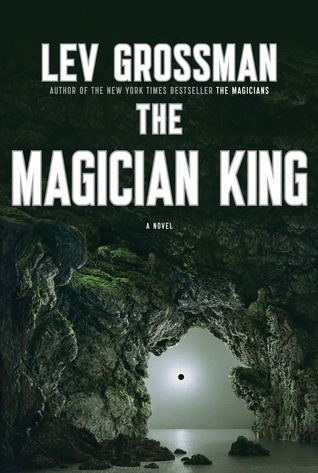
After Quentin and his friends save Fillory from the Beast, he, Eliot, Janet, and Julia become the four kings and queens of the land. But after a while, Quentin desires a quest, so he and Julia embark on a voyage to Outer Island, where they intend to collect unpaid taxes. They get more than they bargained for when they learn of seven golden keys scattered across the land, which can unlock something very special. But as Quentin and Julia’s quest continues, they learn of a greater danger, not just to Fillory, but to all of magic, across all worlds…
The most I remembered about this book is Julia’s story. Julia is only featured in the first book as a distant memory of Quentin’s old life, when he used to have a crush on her. But it turns out that Julia took the same magic test as Quentin, but she failed, and the measures that were supposed to erase her memory also failed. So Julia goes on a quest to not only prove magic was real, but also to teach herself the things she feels she was also supposed to learn.
I enjoyed this aspect of the book, even if some things took a long time to explain. Like in the first book, we go through chunks of the story with detailed explanations, without actually stopping to participate in the action. For example, after Julia recovers from her first journey discovering magic, she makes contact with a group called Free Trader Beowulf, but we don’t actually have a real-time conversation with any of the other group members until well after Julia’s part in the group is established. Most of the time, this storytelling method works, but this particular instance took long enough for me to forget what exactly Free Trader Beowulf even did.
It’s darkly fascinating to watch Julia’s life essentially fall apart after she discovers magic. She is so hungry for knowledge of magic that she is willing to go to the ends of earth for it, even abandoning her family and friends, and not caring much about the destruction her journey creates. Not spoilers exactly, but her journey to ultimate power seems to steal bits of her humanity along the way, and her realization of where her path has led is both heartbreaking and inevitable.
However, what finally happens to Julia is certainly not inevitable, and could have been prevented if other magicians had not reached too high for more power. It’s a troubling scene to read, and you wish it wasn’t part of Julia’s journey to achieving her highest form. There’s even a moment where the smallest pleasure comes through her and it makes the scene even more horrifying.
It’s this particular moment that destroyed the book for a lot of readers, and I can see why. It’s not necessarily the fact that Julia was assaulted, but more because it’s this traumatic event that allows her to achieve a higher magical self, and there is no healing from it. And that is a very horrible thing to think about.
But if I isolate the event from the rest of the rest of the book, I don’t think it ruins the reading experience. It’s one scene amid a wider story where so much compelling adventure and many character moments happen.
Alongside Julia’s journey to becoming a hedge witch, we watch Quentin and his friends sail to the edge of Fillory before discovering there is a grander quest at hand than just going to collect taxes. I like watching the group just enjoying another part of their adventure in a magical land. Quentin is a little bit more proactive and mature than the previous book, having come more into his king role. There are not really any grander themes to explore or points to make: it’s just these twenty-somethings making the most of their new roles and playing out the adventure they’ve always wanted.
While on Outer Island, we even see Quentin get to express some warmth toward the island’s only customs agent and her daughter, which is sweet.
At some point, however, he and Julia are accidentally sent back to Earth, and once again, Quentin is forced to face the possibility that Fillory may be lost to him forever. I was surprised at my own anxiety about how Quentin would get back and what he might lose along the way. But this is where Quentin’s greatest growth happens, and man, after all his griping and whining in the first book, this is a satisfying moment to witness. He is forced to answer the question of what he actually wants to be, which drives him through the rest of the story: to be a hero. But he must learn that a true hero is one who is prepared to pay the price for the quest, and not get the reward.
Probably what I like best about this book are all the individual adventures the characters have that all come together. Quentin, Eliot, Julia, and Janet have their adventures in Fillory before Quentin and Julia make it back to Earth. Josh, who did not become a king in Fillory, did have plenty of adventures crossing the universe with his magic button, and Penny has found himself a new vocation in a crew of monk-like magicians who maintain the doors between worlds. These were all just young kinds going to Brakebills together in the last book, who have all suddenly found their places in the magical cosmos, now playing their roles in a larger magical quest. That growth is pretty cool, especially once we learn of the larger stakes they’re all up against.
The ending left me feeling surprisingly emotional. If the story had ended right there, I think I would have been satisfied enough. Quentin has had some solid growth and a few doors are finally closed. But, Quentin being Quentin, he still can’t quite get it through his head that the real heroes are the ones who pay the price, not get the reward. Perhaps that’ll finally be drilled into him in the next book.
I find I prefer this book over the first book by a small margin. The adventure is larger, the characters show a little more growth, and the stakes are set for a pretty epic finale, even if the climax was jarring in a way that I forgot.

 The Library Key